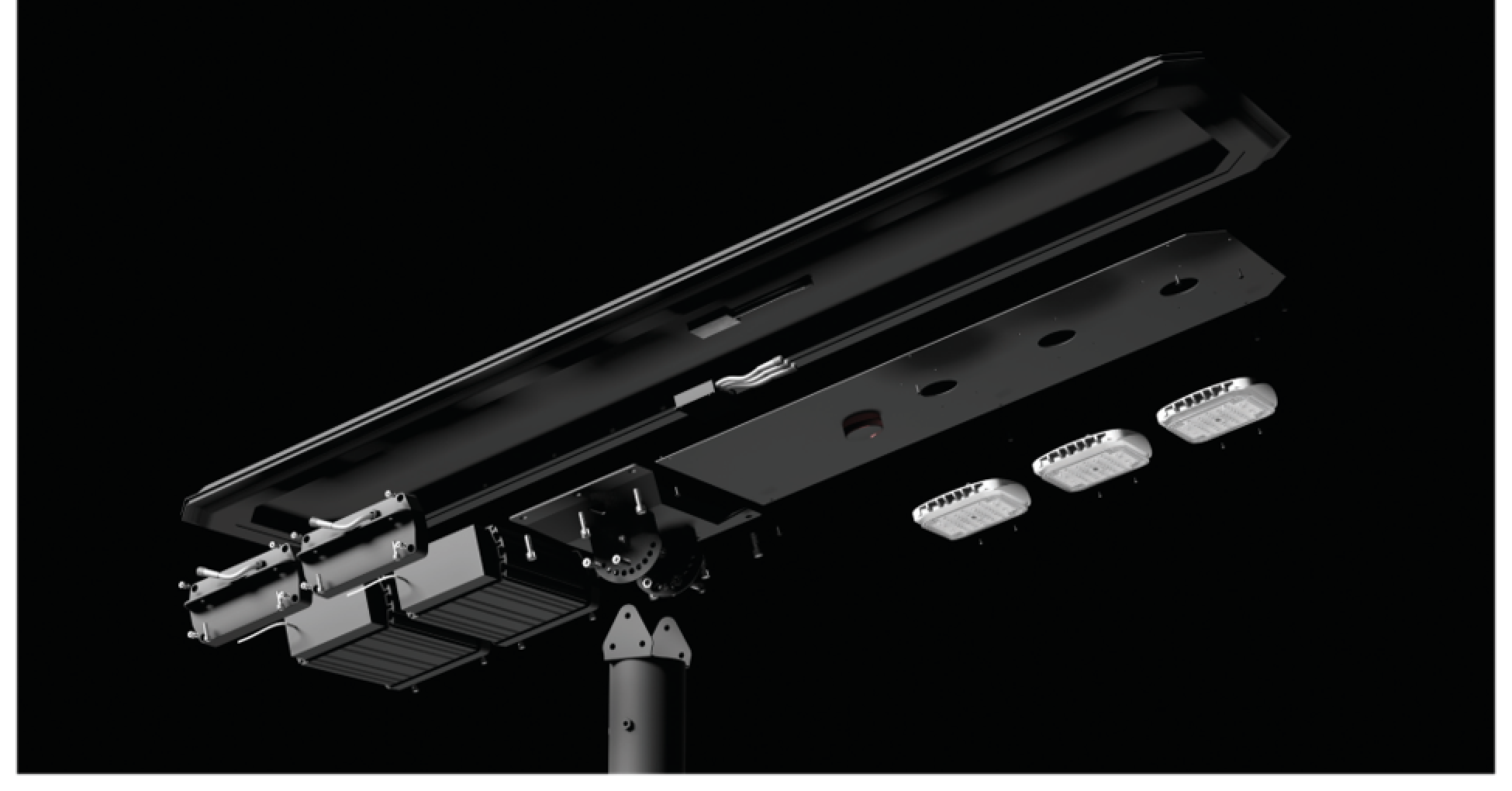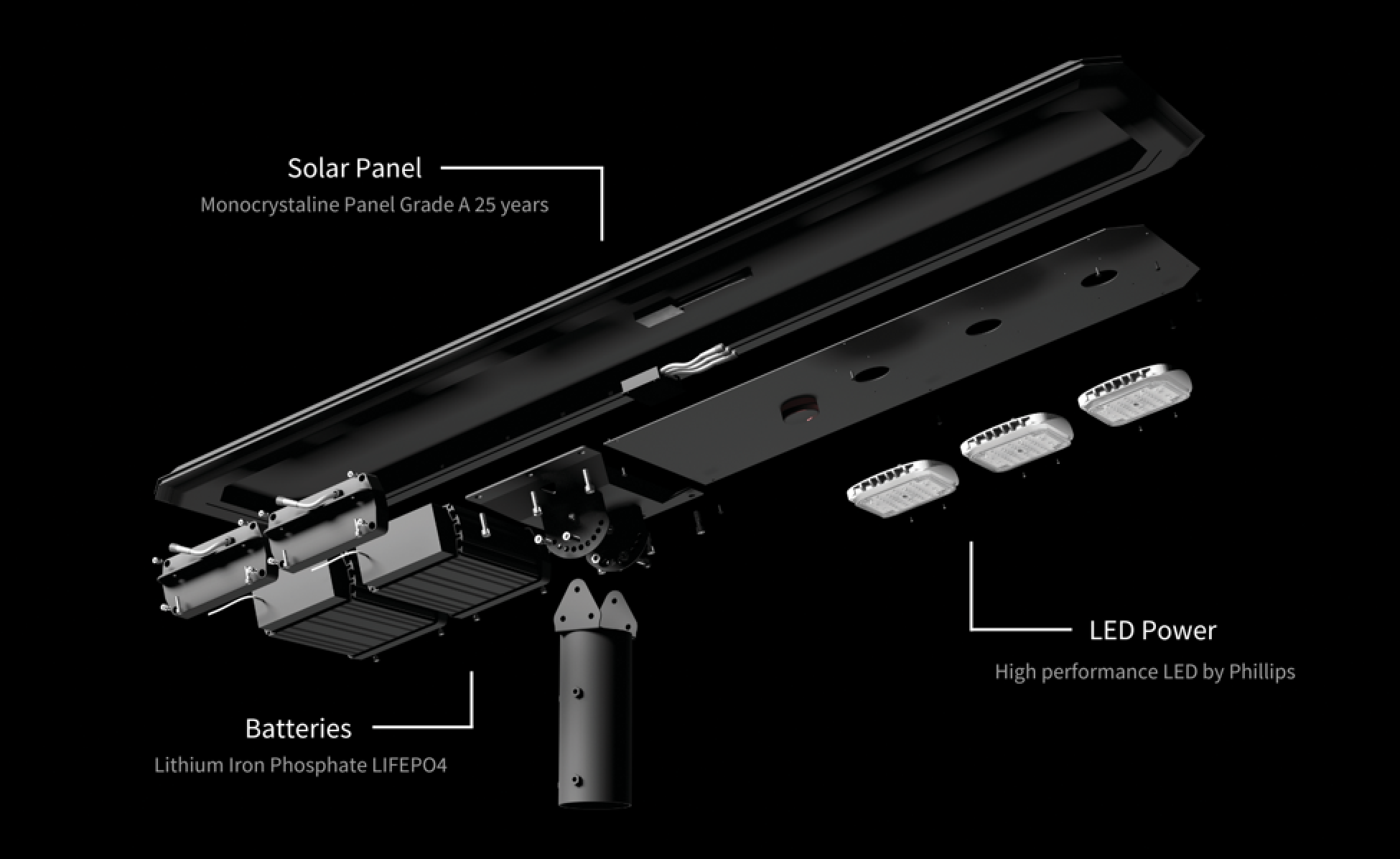
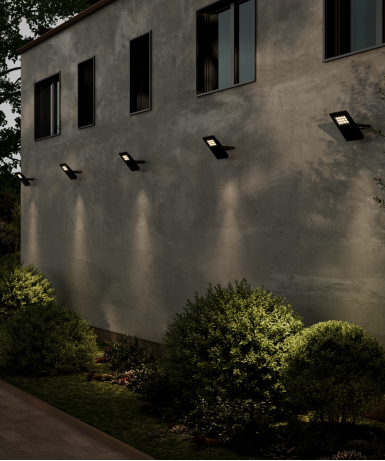

A hybrid solar lighting system combines two power sources: a solar panel with battery storage and a grid connection as backup.
During the day, the solar panel charges the battery. At night, the fixture draws from stored energy. If the battery runs low after an extended cloudy period, the system automatically switches to grid power to maintain consistent output.
The result is a system that operates as solar the vast majority of the time while eliminating the performance risk that comes with pure off-grid solar in demanding or unpredictable conditions.
Pure solar systems work well in the right conditions — adequate sun hours, moderate climate, and applications where an occasional reduction in output is acceptable. But not every project fits that profile.
A parking structure entrance, a main road, a hospital drop-off, or a public transit hub are environments where consistent, full-output lighting isn't optional.
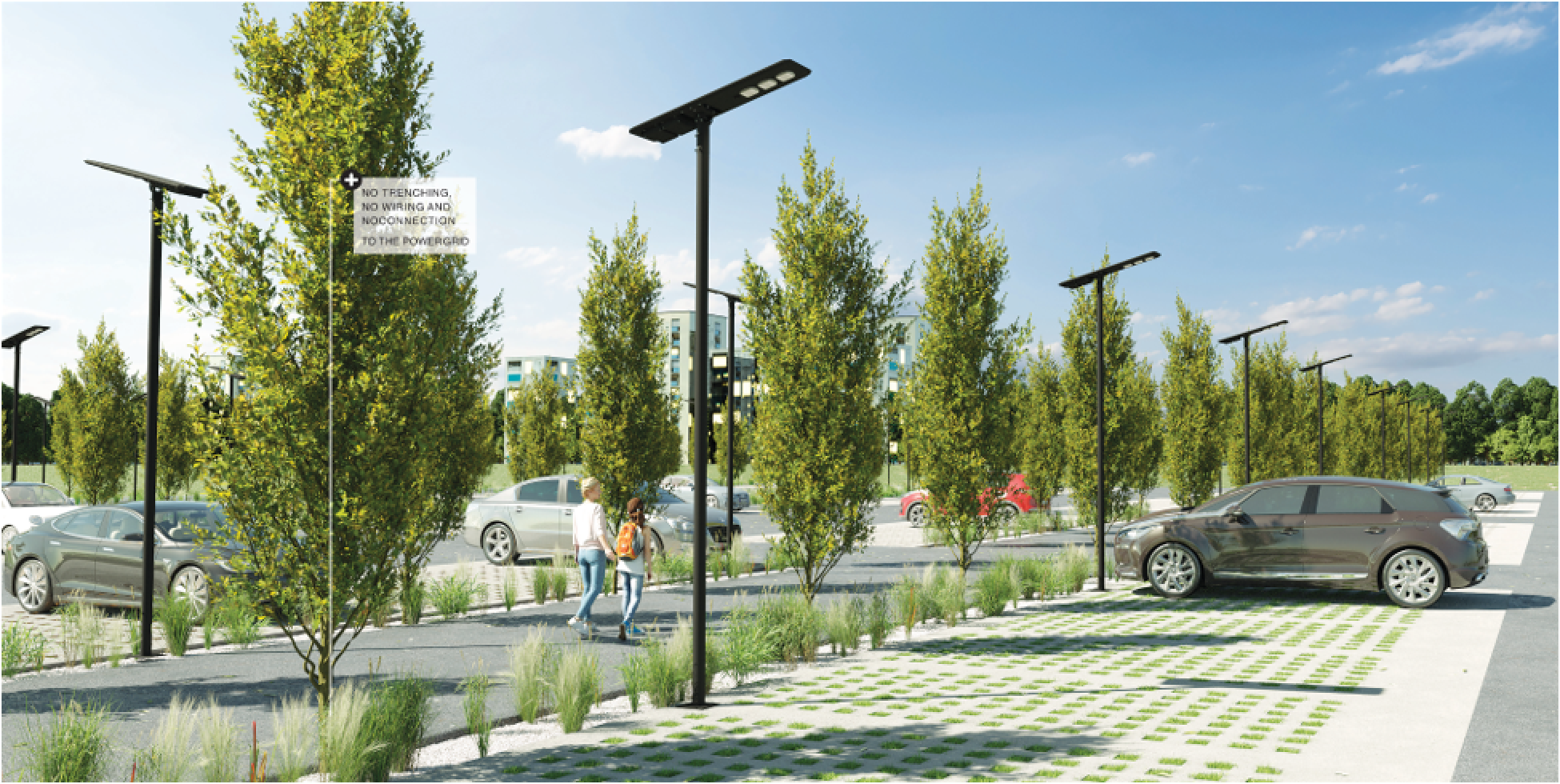
Hybrid closes that gap. The solar infrastructure is still doing the primary work. The grid connection is insurance.
High-criticality zones such as main entrances, security checkpoints, emergency access roads, and loading docks require guaranteed output at all times.
Moderate-traffic zones can often be served by pure solar systems paired with motion-sensing controls.
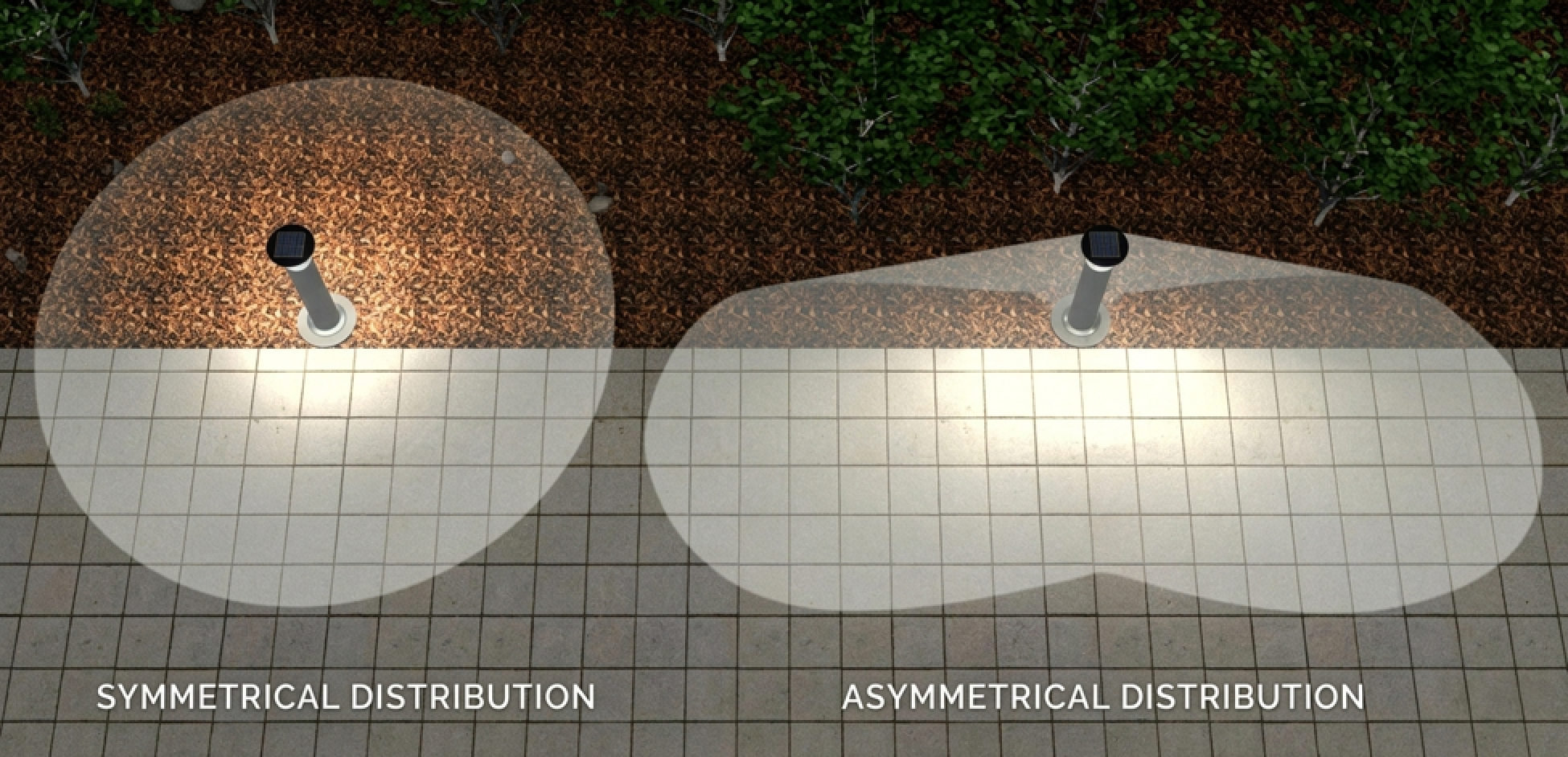
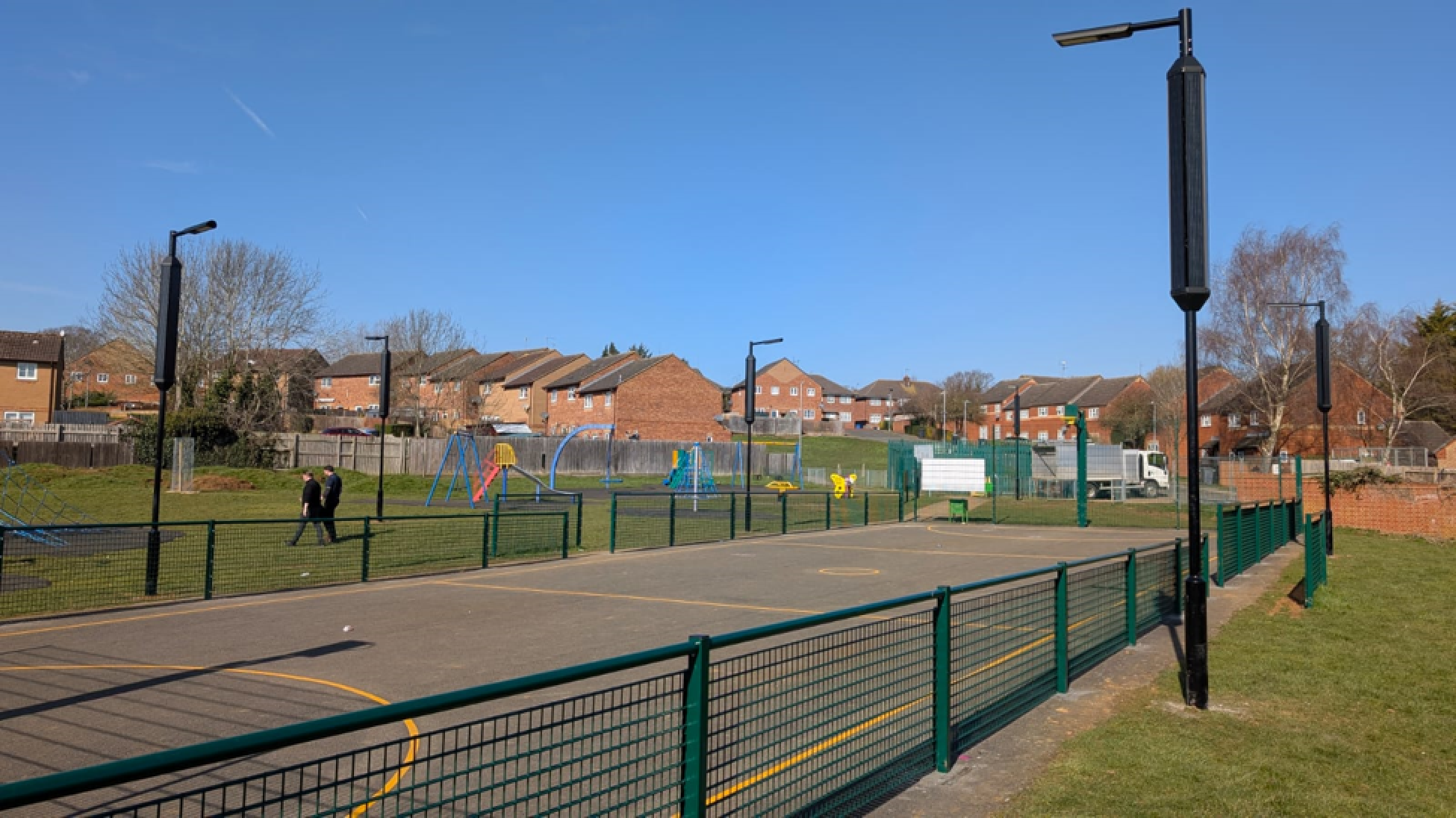
Low-traffic or landscape zones including pedestrian paths, parks, and decorative lighting are typically the easiest solar applications.
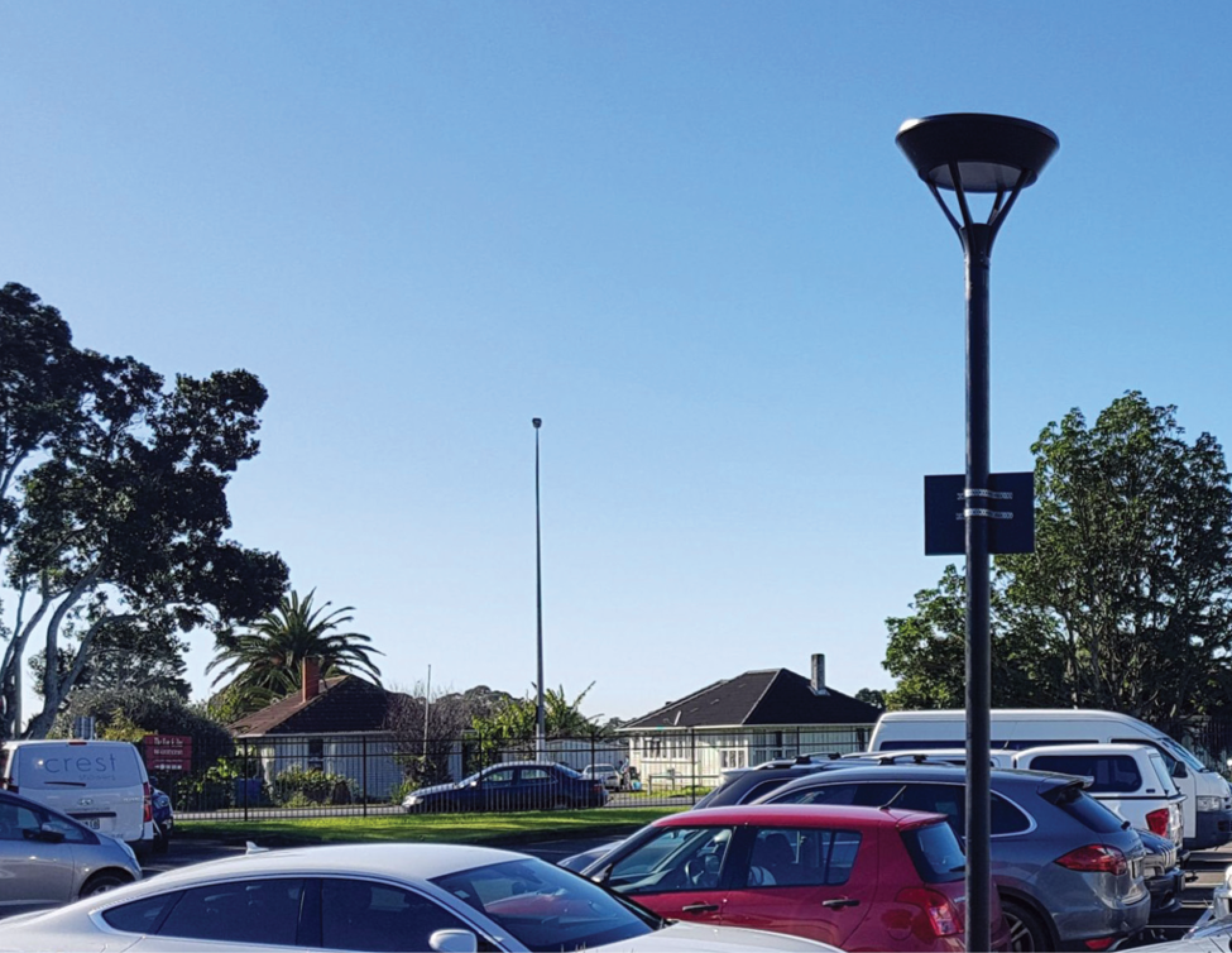
In areas where grid extension is expensive, a hybrid system can dramatically reduce the amount of electrical infrastructure required.
Instead of running conduit to every fixture, you run it only to the hybrid units in critical zones while the rest of the site operates independently.
Sun hours at the project location
Battery chemistry
Control integration
Zoning strategy
Hybrid solar lighting isn't the answer to every project — but for sites that need reliability without full grid dependency, it's often the most intelligent path forward.